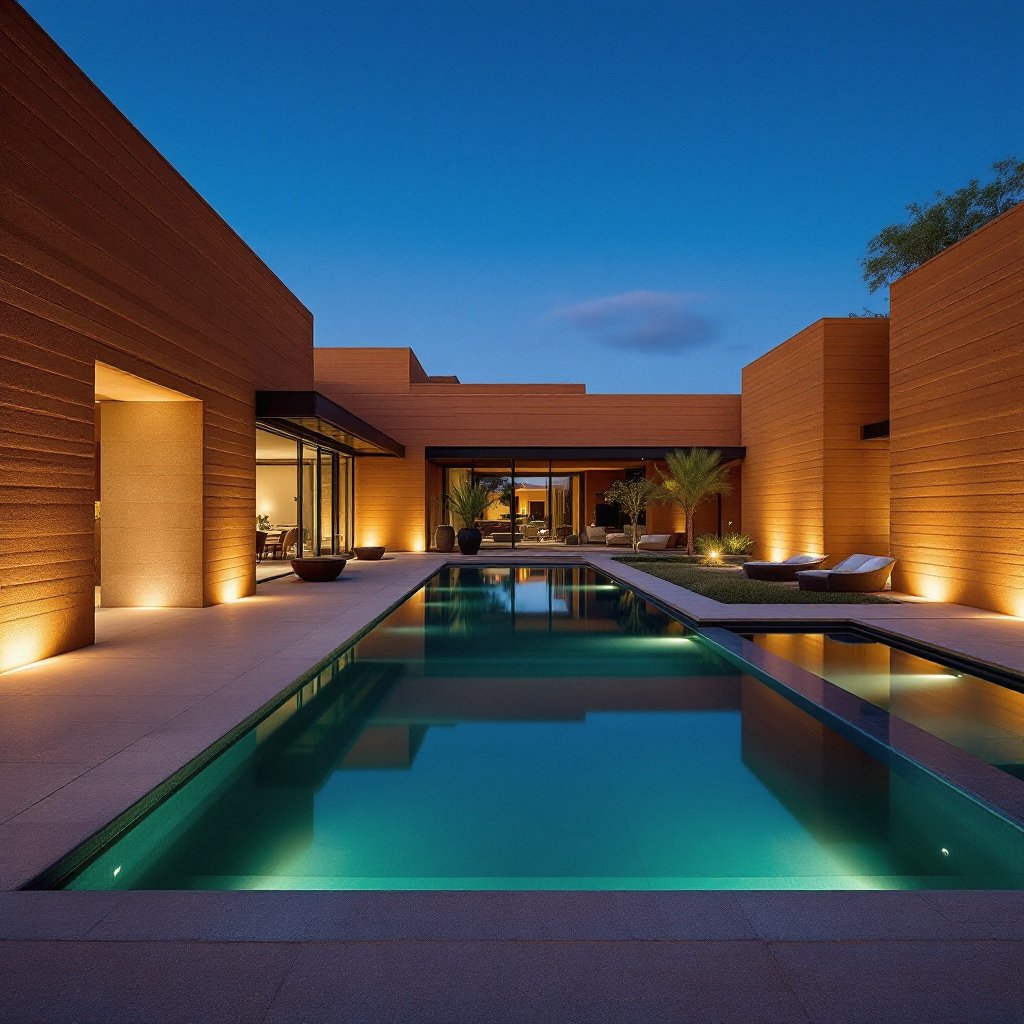
Our operating business is registered and rooted in Wyoming, the state that named us. From the Tetons to the Bighorns to the high plains, we build estate-grade rammed earth engineered for the hardest climate we serve. Residential builds from $1M.
Request a Consultation Call (307) 217-5491Because it is the honest answer to the question every client eventually asks: where would you build one for yourself? Bighorn Rammed Earth is a Wyoming business, named for Wyoming mountains, and this page is not an expansion market: it is the home office. Wyoming is also the sternest examiner on our service map. A wall assembly that satisfies a Teton County winter (months of hard freeze, serious snow load, wind that files its own reports) will not be troubled by anything Tennessee or Indiana can offer. We treat the state as our proving ground, and everything we detail elsewhere descends from what this climate demands.
There is a deeper fit, too. Rammed earth is architecture that behaves like landform: 18 to 24 inches of compacted, stabilized ground, laid down in visible strata the way sediment actually accumulates. Wyoming is the one state in our footprint where the buildings people admire most are still the land itself. An earthen wall against the Absarokas or the Tetons does not compete with the view. It agrees with it.
Jackson Hole is among the densest concentrations of luxury residential value in the Mountain West, a valley where conservation-minded land ownership, serious architecture and serious money have overlapped for decades, and where the constraint has never been demand but buildable ground. It is the natural American home for estate-grade earthen construction: clients there already think in terms of land ethic, permanence and materials that belong to the place. We maintain a dedicated guide to building in the valley (market, engineering and siting) at our Jackson Hole page.
On the high plains side of the state, our Cheyenne & southeast Wyoming guide covers building against wind and winter at 6,000 feet: the home-state build, done for ranch country. Under the range we took our name from, the Sheridan & Bighorn foothills guide covers ranch estates, snow loads and chinook swings; in the middle of the state, the Casper & central Wyoming guide covers river-valley and mountain-bench sites.
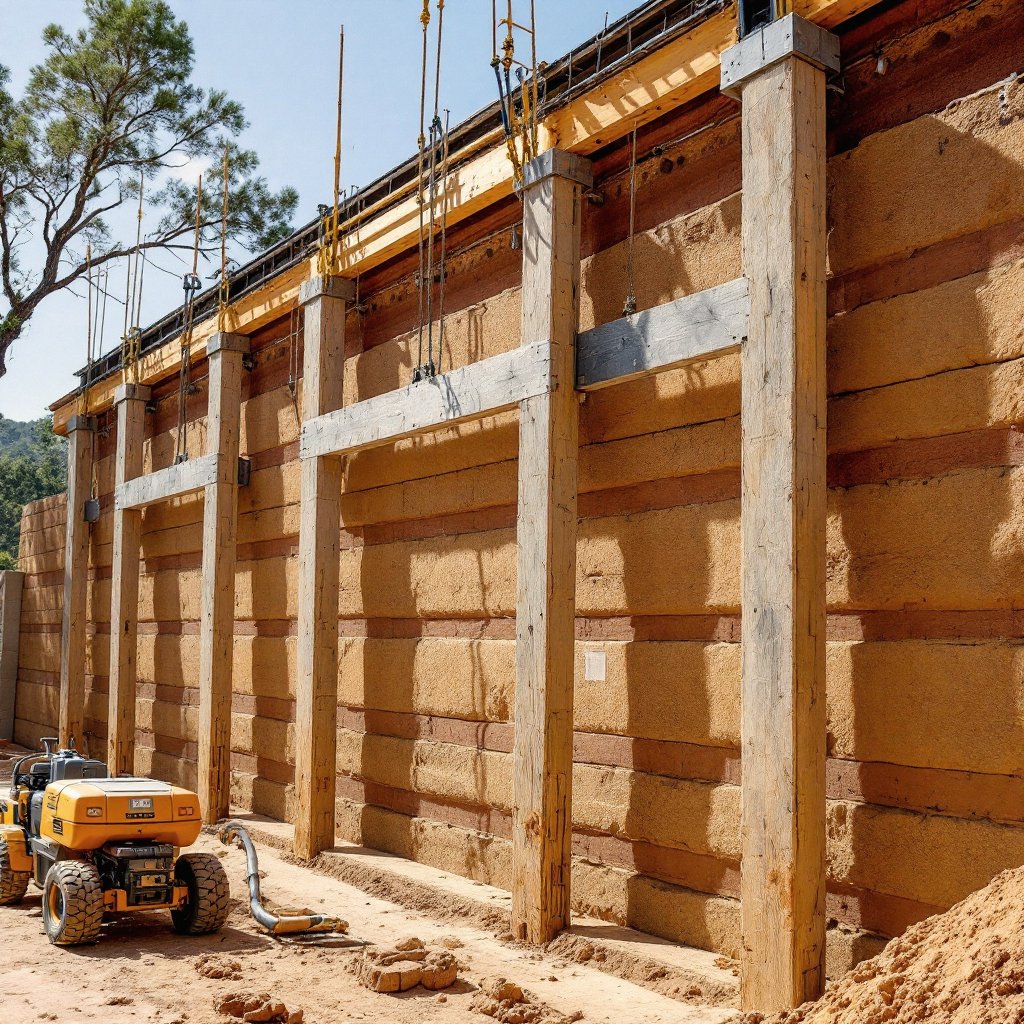
With respect, and with an assembly built for the job. Every Wyoming residence we design carries our insulated-core double-wythe wall: two independent wythes of stabilized rammed earth with a continuous insulation layer between them. The mass you see and touch (inside and out) is pure strata; the thermal break hidden in the core is what lets a mass wall meet modern energy expectations at 6,000 feet. Stabilization runs 5–10% cement content, tuned to the soil blend and exposure, and the compacted material shrugs at freeze-thaw cycling that would spall lesser masonry.
Above the wall, the roof does disproportionate work. Our standard 24–36 inch overhangs get deepened and re-engineered in snow country: structures sized to real ground-snow loads, eave and valley detailing planned around where a winter's worth of shed snow will actually land, and drainage that assumes spring melt arrives all at once, because it does. Below the wall, frost-depth stem walls in concrete lift the earthen wythes well clear of grade, splash and drift line. Wind, Wyoming's fifth season, is the quiet beneficiary of mass construction: a wall weighing several tons per running foot does not rattle, hum or flex, and the interior stillness on a 50-mile-per-hour day is one of the first things visitors remark on.
| Market | Elevation | Climate reality | Design response |
|---|---|---|---|
| Jackson Hole / Teton County | 6,200–6,800 ft | Long hard winters, heavy snow, short brilliant summers | Full insulated-core double-wythe, deepened snow-country overhangs, south glazing sized to winter sun, heavy-timber and glass partnerships |
| Sheridan / Bighorn front | 3,700–4,500 ft | Chinook swings, real winters, generous summers | Insulated-core walls, mass tuned to large diurnal swings, ranch-vernacular rooflines with deep protective eaves |
| Cody / Absaroka front | 5,000–5,400 ft | Cold, dry, famously windy | Mass walls as wind architecture, defended west faces, sheltered courtyards, entries placed out of the prevailing blast |
| Cheyenne / high plains | 6,100 ft | Hail, wind, hard freeze, big sky exposure | Non-combustible mineral envelope, impact-indifferent wall faces, stem walls and grading detailed for drifting snow |
| Laramie / Snowy Range | 7,200 ft | Among the coldest design temperatures we build to | Maximum-performance core insulation, compact plans, mass floors banking low-angle winter sun |
Wyoming's building culture was never about fashion. Ranch families here think in generations: land is held, worked and handed down, and the structures that earn respect are the ones still standing square after the third owner. Rammed earth belongs to that ethic in a way no framed house can. The material's precedents are not decades old but centuries, sections of the Great Wall of China are rammed earth still standing after two millennia, the French pisé tradition built farmhouses that have outlasted the families' surnames, and the Church of the Holy Cross in South Carolina has held services in earthen walls since 1850. A Wyoming client building a headquarters house for legacy land is not making an exotic choice. They are making the traditional one, executed with modern engineering.
The practical fit is just as strong. A monolithic mineral wall does not burn, which matters in a state where grassland and forest-interface fire is part of the calendar. It does not feed insects, rot at the sill line, or need repainting on a schedule. Maintenance on the wall system is essentially inspection. For an owner whose ranch manager already has enough to do, a house that asks for nothing is a genuine amenity.
A meaningful share of our Wyoming inquiries now comes from families relocating their legal and financial lives, not just their skis. Wyoming levies no state income tax, and its trust and entity law has made the state a quiet favorite of family offices and estate planners. The houses that follow that migration tend to share a brief: a true primary residence rather than a lodge-styled second home, built for year-round living, decades of holding, and eventual transfer within the family. That brief is rammed earth's home territory. A wall assembly with a centuries-scale service life, near-zero envelope maintenance and no dependence on any fashion cycle is, bluntly, the architectural version of the trust structure these families are already building. We coordinate readily with owners' advisors on entity ownership, phased funding and the 16–26 month build timelines that estate planning calendars need to know about.
The state's geology gives us one of the more handsome palettes we work with. Granitic decomposed soils off the ranges bring sparkle, sharp aggregate and structural generosity. Alluvial benches along the river valleys (the Snake, the Bighorn, the North Platte) carry buff, tan and gray blends that ram into calm, banded strata. Red beds around the flanks of the Bighorns and near Thermopolis offer iron oxides for owners who want warmth in the wall. As everywhere, we sample before we design: two test pits during due diligence tell us whether the parcel's own ground can join the blend, and Wyoming parcels say yes more often than most. Walls priced as part of a turnkey build run with the project's overall $250–$450+ per square foot range; the soil under your boots is frequently part of the recipe.
Wyoming's counties are accustomed to serious custom construction (Teton County in particular reviews some of the most engineered residential work in the country) and our stamped structural and energy documentation is built for that review. Financing follows the standard custom-estate draw schedule; where appraisers lack local earthen comparables we bring the precedent packet that has carried the conversation in every state we serve. And because this is our home state, the logistics are simply shorter: our operating base, our formwork and our supervision all live here. Wyoming clients get the version of Bighorn with the shortest supply line: the one that goes home at night in the same state where your walls are rising.
Request a Consultation Call (307) 217-5491
