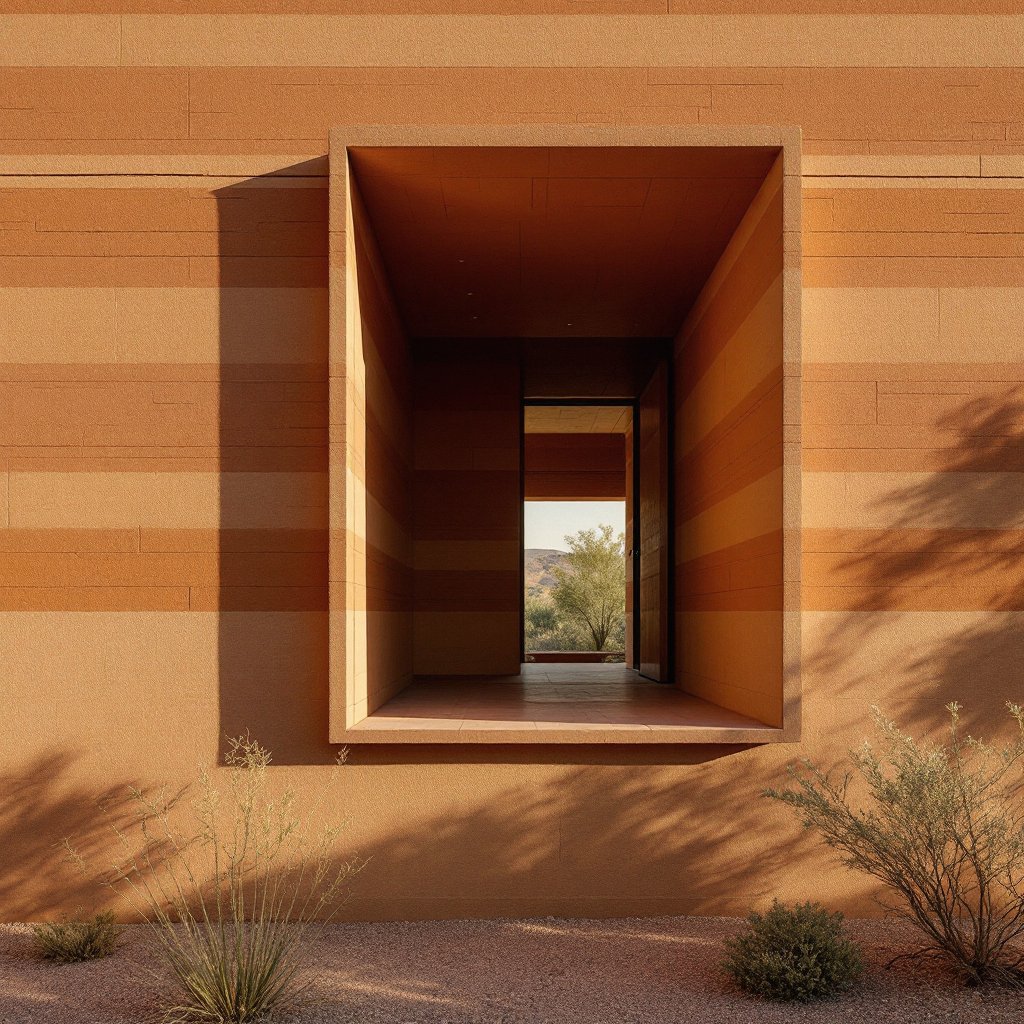
Jackson Hole is our home state’s flagship market, a valley that prizes land, permanence and architecture with real weight. We build estate-grade rammed earth engineered for Teton winters. From $1M.
Request a Consultation Call (307) 217-5491← Back to our Wyoming service area
Stand anywhere in the valley and the answer is in front of you. The Tetons are the most legible geology in America (bare stone rising two vertical kilometers with no foothill preamble) and the architecture that succeeds here has always been the kind that defers to that view rather than competing with it. Rammed earth defers by nature. A wall of compacted, stratified ground reads as landform: 18 to 24 inches thick, banded like a road cut, colored by the actual mineral content of actual earth. Against a backdrop of exposed rock strata, it is the one wall system that looks like it was invited.
Jackson Hole is also, by any honest measure, one of the densest luxury residential markets in the Mountain West, a valley where the overwhelming majority of the land base is federally protected, private ground is permanently scarce, and buyers have spent decades competing for the small remainder. Scarcity of that order changes what a house is for. Nobody builds a placeholder on land this hard to get. The valley's houses are endowments, built to be held and handed down, and that is the brief rammed earth answers better than any material we know.
The valley's luxury inventory runs from Teton Village ski access through Wilson and the West Bank corridor to the ranch parcels north toward the park boundary, with Jackson proper anchoring the south. The buyer pool is national and increasingly domicile-driven: Wyoming's absence of a state income tax and its family-office-friendly trust law have turned many second-home owners into full legal residents, and their next build reflects it, true primary residences with year-round programs, not lodge-styled trophies used three weeks a winter. Conservation easements shape the land supply and the culture alike; this is a market where owners voluntarily extinguish development rights on their own ground, and where a building's relationship to the land is discussed as seriously as its square footage. We built our practice for exactly this client.
The valley's contemporary vernacular (heavy timber structure, big glass toward the range, stone anchoring the composition) takes to rammed earth the way it once took to stone, only better. Earthen mass does the anchoring with more visual calm than fieldstone and more honesty than veneer: the strata are structure, not wallpaper. Our Jackson Hole designs typically run mass walls as the home's spine and weather shoulder (the north and west defenses, the entry sequence, the fireplace core) with timber and glass opening the south and east to the view. Deep reveals at every opening announce the wall's true thickness; a two-foot-deep window seat facing the Grand is its own argument. Inside, the mass earns its keep acoustically. Ski houses are full houses (guests, gear, kids, parties) and a rammed earth party wall is the difference between a bunk wing that is theoretically separate and one that actually is.
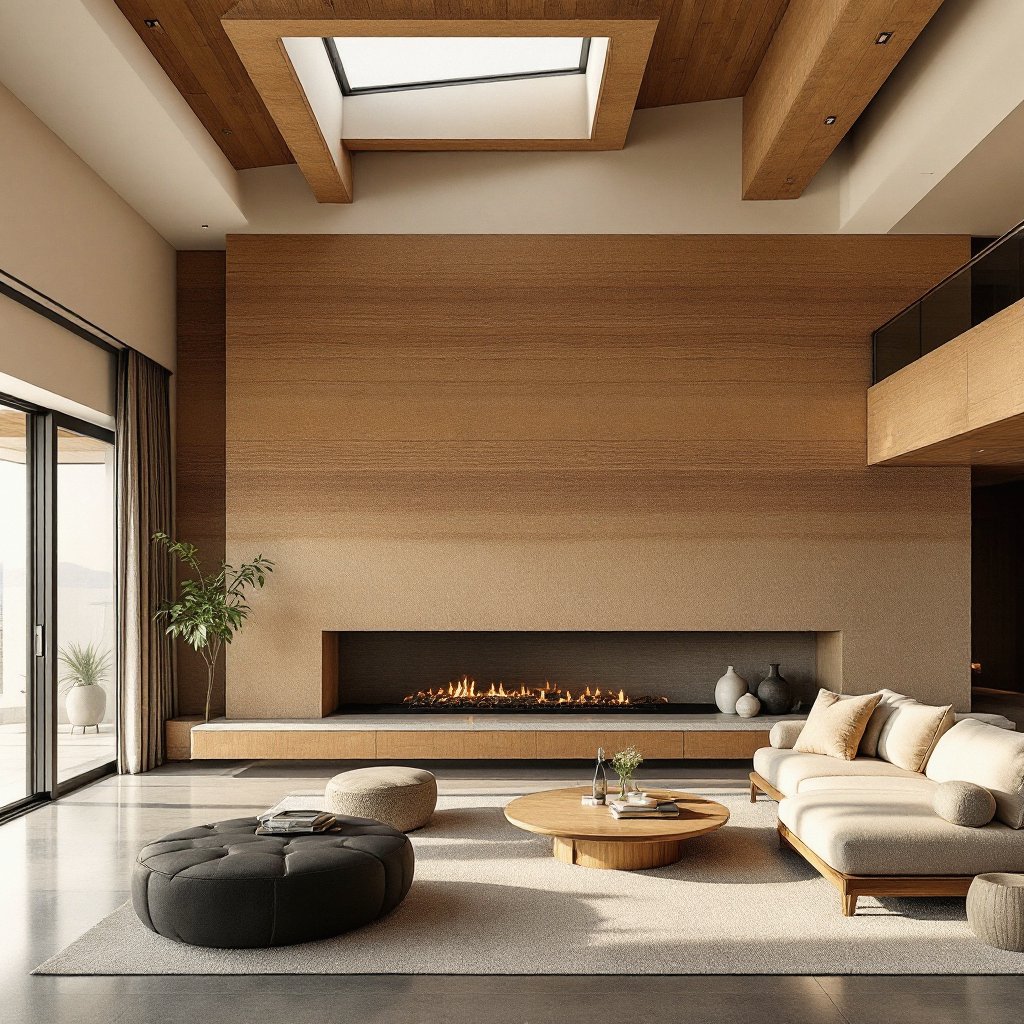
This valley is the sternest climate on our service map, and every assembly decision starts there. The wall is our insulated-core double-wythe: two independent wythes of stabilized rammed earth (5–10% cement content, tuned to blend and exposure) around a continuous insulation core, so the visible material inside and out is pure strata while the section meets modern cold-climate energy expectations at 6,200 feet. Compacted stabilized earth handles freeze-thaw cycling without spalling; the physics that let sections of the Great Wall survive two thousand winters have not been repealed.
The roof works harder here than anywhere else we build. Our standard 24–36 inch overhangs get deepened and structurally re-engineered for Teton County snow loads, with eave, valley and entry detailing planned around where a full winter's shed snow will actually land, the difference between a sheltered front door and an ice cave is design, not luck. Frost-depth concrete stem walls lift the earthen wythes clear of grade, splash and drift; grading assumes spring melt arrives as an event. And the mass pays a daily dividend: south glazing sized to the valley's brilliant low-angle winter sun lets floors and walls bank heat through the afternoon and spend it back through the night, flattening the mechanical load in a climate where the mechanical bill is otherwise a second mortgage. Cold-climate rammed earth is not a theory we are testing on clients, the Nk'Mip Desert Cultural Centre in British Columbia has stood since 2006 in a Canadian climate, and the European pisé tradition wintered for centuries before insulation existed at all.
Jackson Hole's defining civic instinct is restraint: a valley that chose, repeatedly and at real cost, to keep most of itself unbuilt. Owners here think about stewardship without being prompted, and the questions we get reflect it: what is in the wall, where does it come from, what happens to it in a hundred years. The answers are the material's best marketing. A rammed earth wall is principally local mineral ground, stabilized at 5–10% rather than poured as full concrete; it contains nothing that off-gasses, feeds nothing that burns, and at the end of a service life measured in centuries it is, essentially, earth again. On easement-encumbered parcels, where building envelopes are fixed and every approval is scrutinized, the material's low visual temperature is a genuine advantage: review boards respond to physical strata sample panels the way no rendering can manage.
| Question | The Jackson Hole answer |
|---|---|
| Wall assembly | Insulated-core double-wythe, 18–24" total, strata faces inside and out |
| Snow & roof | Overhangs deepened beyond our standard 24–36", engineered to county snow loads, shed paths designed |
| Timeline | 16–26 months soil test to keys; valley winters shape the ramming calendar and we schedule around them honestly |
| Budget | Turnkey $250–$450+ per square foot; $1M residential minimum; Teton logistics sit at the upper end |
| Soil | Valley alluvium and granitic blends test well; every parcel gets pits before design |
The valley's winters get the engineering headlines, but its summers make the quieter case. High-altitude days run warm and bright while the nights drop hard, a classic diurnal swing, and thermal mass is the instrument built for it. Walls absorb the afternoon, the windows flush the evening cool through, and the house rides out August without mechanical cooling doing anything heroic. Guests notice it before owners can explain it: the interior stillness of two feet of earth on a blazing valley afternoon is the material's best first impression, and in a market of houses that all claim to belong to the landscape, one that behaves like the landscape has a certain advantage.
Teton County's development review is among the most rigorous in the country, and we treat that as a feature: our stamped structural and energy documentation is assembled for exactly this level of scrutiny, and mass-wall construction (non-combustible, low-reflectance, visually quiet) tends to make friends in a review process built around protecting the valley's character. The construction season is real: ramming happens in the warm months, and our 16–26 month timelines are scheduled around the valley's calendar rather than in denial of it. Because Wyoming is our home state, the supervision chain is short: this is the market we drive to, not fly to. Financing follows the standard custom-estate draw schedule, and where appraisers want earthen comparables we bring the precedent packet that has carried that conversation in every state we serve.
Request a Consultation Call (307) 217-5491
