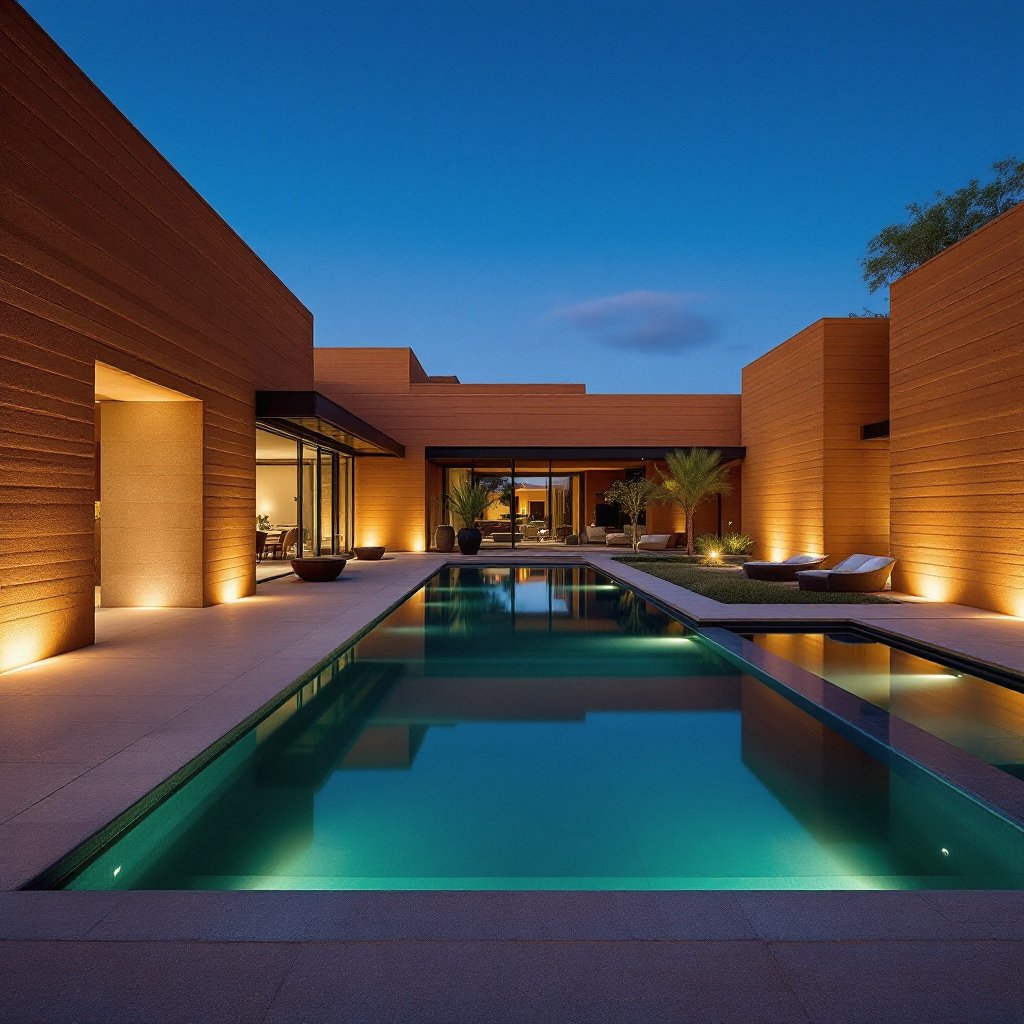
From Leiper's Fork estates to Cumberland Plateau retreats, Tennessee's landscape asks for architecture that belongs to it. We compact it from the ground itself.
Request a Consultation Call (307) 217-5491Beautifully, with engineering the desert never needed. Tennessee brings humidity, sixty inches of rain and real freeze-thaw cycles, so our assemblies answer with stabilized mixes engineered for saturation resistance, insulation layers within the wall for energy code and comfort, elevated stem walls, and the deep roof overhangs that also happen to make beautiful southern porches. The reward is a home whose interior humidity and temperature barely move through Tennessee's theatrical seasons: mass does quietly what HVAC does loudly.
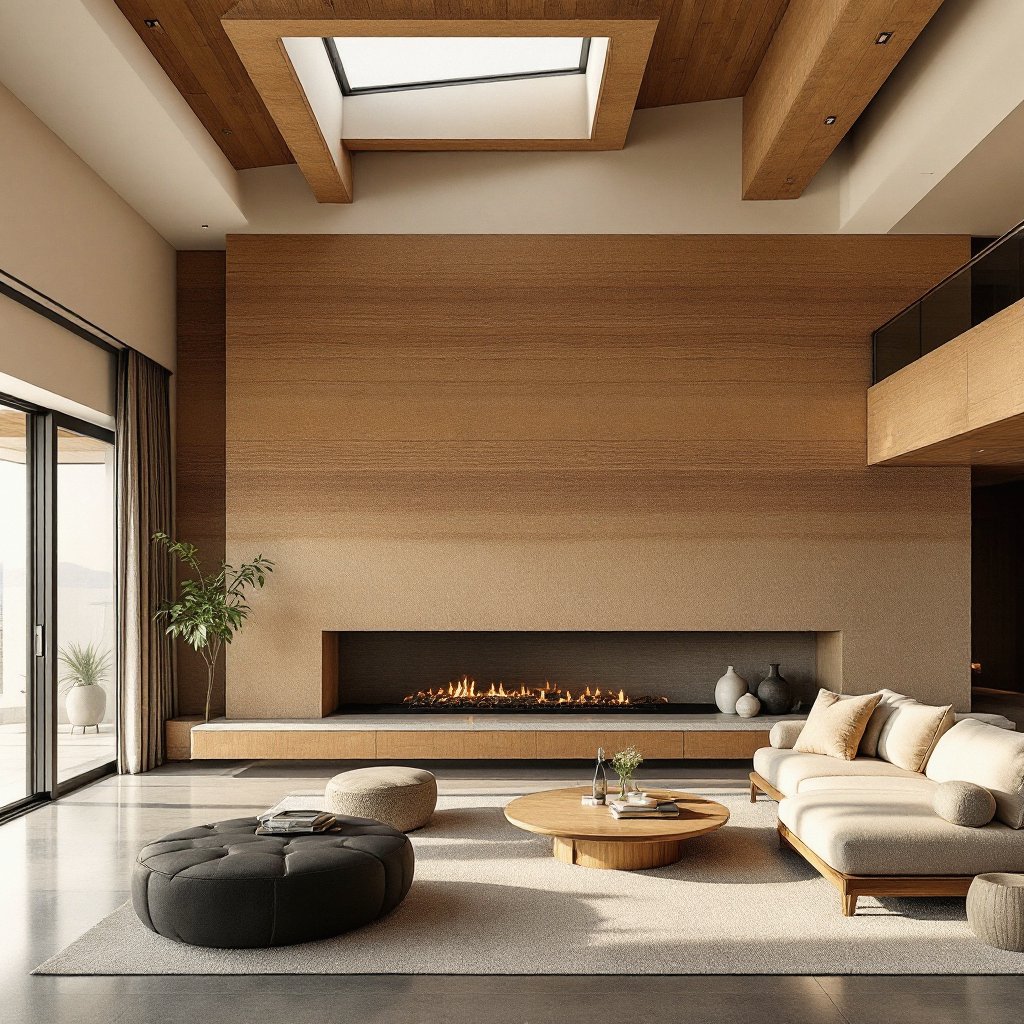
Tennessee has almost no rammed earth building stock, which means a Bighorn home here isn't one of the nicest houses in the county; it's a category of one. For buyers who collect what can't be repeated, that scarcity is the entire brief. Our Tennessee operations are led from the center of the state.
Sixty inches of rain and a real freeze line mean our Tennessee walls are engineered as four-season assemblies, and buyers deserve to see inside one: exterior stratified wythe, continuous rigid insulation core sized to climate zone 4A energy code, interior stratified wythe (strata visible inside and out), stainless ties across the core, stem walls a full foot above grade, and roof overhangs in the 24–36 inch range that double as the porches this state was always going to demand anyway. Stabilization percentages run higher than desert practice; sealer systems are chosen for humid-cycle breathability. It's more engineering than an Arizona wall, and the finished interior, holding steady through an August humidity spell or a January ice storm, is the argument for every layer of it.
Williamson County leads the practice: Leiper's Fork and the Natchez Trace corridor pair rolling-land privacy with buyers who collect the singular; Franklin and Brentwood estates trade at price points where the earth premium disappears into the finish budget. Beyond the belt: the Highland Rim's plateau edges offer the long-view sites this architecture was born for; the Sewanee and Monteagle country adds elevation and university-town culture; and East Tennessee's Smoky foothills bring tourism-fed valuations that make legacy builds pencil beautifully. Our operations center in middle Tennessee (the (615) number is not decorative) which makes the estate belt our shortest mobilization in the state.
Tennessee clays are real clays, the red-orange subsoils of the Highland Rim carry iron warmth, while limestone-country soils lend buff and gray-cream bands. Raw, they're too clay-heavy for structural walls; blended with engineered sand and aggregate fractions they produce strata with a warmth desert soils can't imitate. Every build still carries its ground's signature, Tennessee's just arrives with more drama in the band contrast.
Williamson County is the obvious center of gravity, but the deeper map rewards study. Along Davidson County's edges, Forest Hills and Oak Hill hold wooded, contoured lots minutes from downtown Nashville where a low strata house would sit more naturally than most of what has been built on them, and the hills northwest toward Whites Creek hide acreage most buyers never think to tour. South of the Williamson line, Maury County is where the estate belt is quietly extending: Columbia-corridor land still trades at acreage prices while the buyers arriving there are the same ones who priced Leiper's Fork. North of the city, Sumner and Wilson counties wrap Old Hickory Lake with peninsula lots that pair water with real land. Then the elevations: the Cumberland Plateau around Crossville and the south end near Sewanee offer thousand-foot escarpment views and cooler summers, while East Tennessee's Blount County foothills and the ridges west of Knoxville put the Smokies on the horizon with airport access twenty minutes away. Each of these is a different site brief, and the same wall, tuned differently, answers all of them.
Tennessee's signature industry runs on controlled sound, and two feet of compacted earth is one of the best acoustic instruments a building can be made of. Mass is what stops sound transmission (it is why serious studios pour money into density) and a rammed earth wall delivers it as architecture rather than as buried layers of engineering. For recording and production spaces, writer rooms and listening environments, monolithic earth offers isolation, interior acoustic warmth and a look no acoustic panel ever had. The same logic extends across the state's hospitality boom: distillery tasting rooms and rickhouse-adjacent visitor spaces that hold temperature the way cellars want to, event venues in the hills where a strata wall becomes the backdrop of every photograph taken there, and boutique hospitality that needs one unrepeatable thing to anchor the brand. Commercial wall work runs $50–$225 per square foot of wall face, and Tennessee (musical, touristed, building constantly) may be its best under-exploited market in the country.
Three Tennessee-specific realities shape our site advice here. First, karst: much of Middle Tennessee sits on limestone that dissolves, which is why the region has springs, caves and the occasional sinkhole. It is not a reason to fear the ground: it is a reason to buy a geotechnical study before you buy the parcel, and we coordinate exactly that during discovery so foundations are designed for what is actually below them. Second, ridge sites: the state's most dramatic lots ride ridgelines, which bring wind exposure, longer drives, and septic fields that need contour-aware placement, all solvable, all better priced early. A ridge also hands the architecture its best gift: a long, low mass wall running the crest, reading like an outcrop that learned symmetry. Third, TVA lake country: Tims Ford, Center Hill, Norris and their kin combine deep water with public-land shorelines, and shoreline alteration runs through TVA permitting on its own clock. We fold that timeline into the project schedule rather than discovering it mid-design, and the reward is a house of earth standing over water (a pairing neither element diminishes.
April arrives loud here) supercell season, hail on the metal roof, the sky doing its Middle Tennessee theater. Inside two feet of earth the storm is a rumor; the mass neither shakes nor whistles, and the power flickering matters less in a house whose temperature barely drifts overnight. July and August are the real exam: weeks of 95-degree afternoons wrapped in the kind of humidity that makes framed houses run their air conditioning like a losing argument. The mass wall's interior face holds steady and cool to the hand, the insulated core keeps the outdoor heat where it belongs, and the vapor-open interior finish quietly buffers moisture, so the house feels dry at humidity levels that make drywall feel damp. October is the payoff month, windows open, walls banking warm afternoons against cool nights, the strata glowing in low autumn light. Then the January ice storm: the county dark, the roads glazed, and a house that loses single digits of temperature overnight while its neighbors lose twenty. Four seasons is not a complication for this material in Tennessee. It is the demonstration.
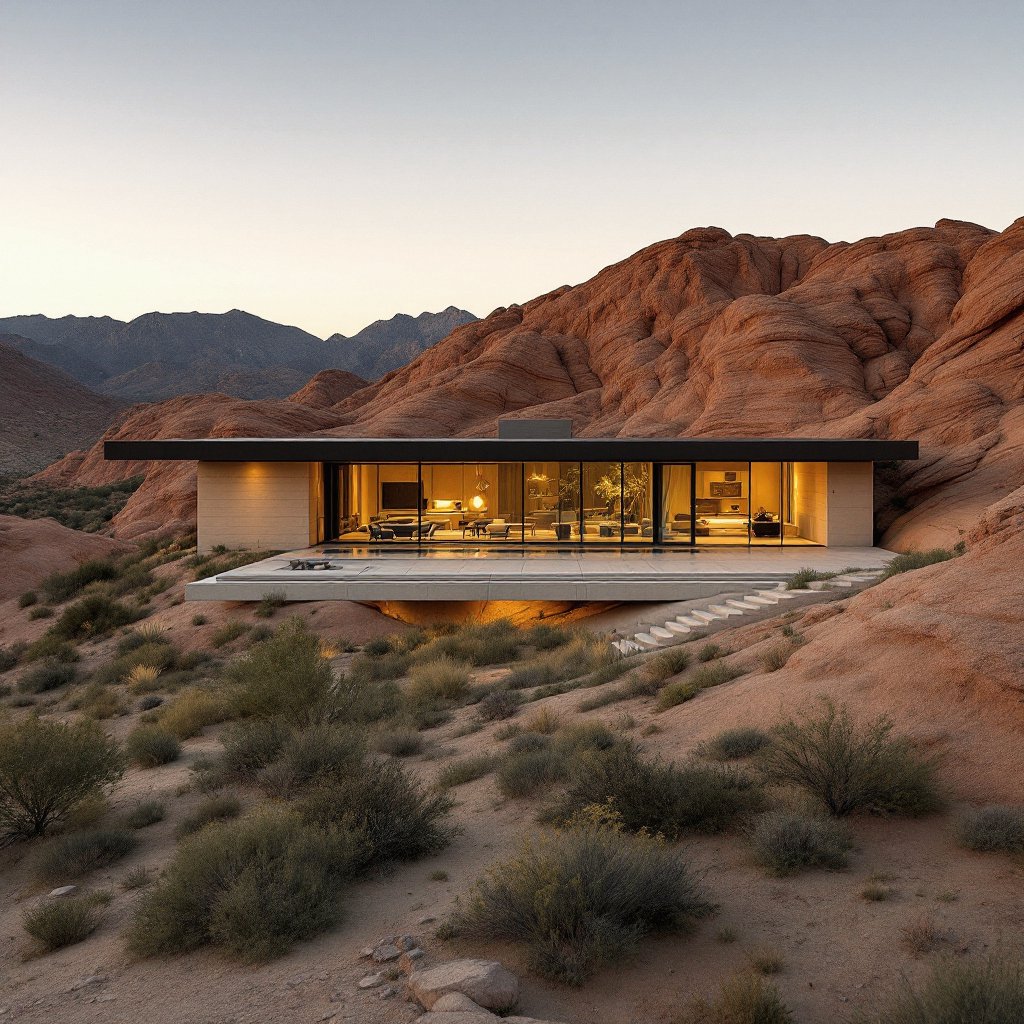
Buyers here sometimes assume earthen walls are a desert technology on a humid-state adventure. The record says otherwise. The Church of the Holy Cross in Stateburg, South Carolina (rammed earth, completed in 1850) has stood through more than 170 Southeastern summers, hurricanes included, in a climate wetter than Tennessee's. Depression-era USDA researchers built and studied earthen test structures precisely to prove the method for the humid American South, and their findings hold: with dry feet and a good roof, compacted earth is a Southeastern material. What Tennessee lacked was never suitability. It was a builder willing to do the engineering (the stabilized mixes, the insulated cores, the stem walls and 24–36 inch overhangs) at the standard the material deserves. That is the gap this practice exists to close, one commission at a time.
Building in Middle Tennessee? Our dedicated Nashville guide covers the Williamson County estate belt (Leiper’s Fork to Belle Meade) with karst siting, four-season assemblies and the first-mover case, in depth.
For the estate country south of the city â Leiper’s Fork, College Grove, Arrington â see the dedicated Franklin & Williamson County guide.
Request a Consultation Call (307) 217-5491
