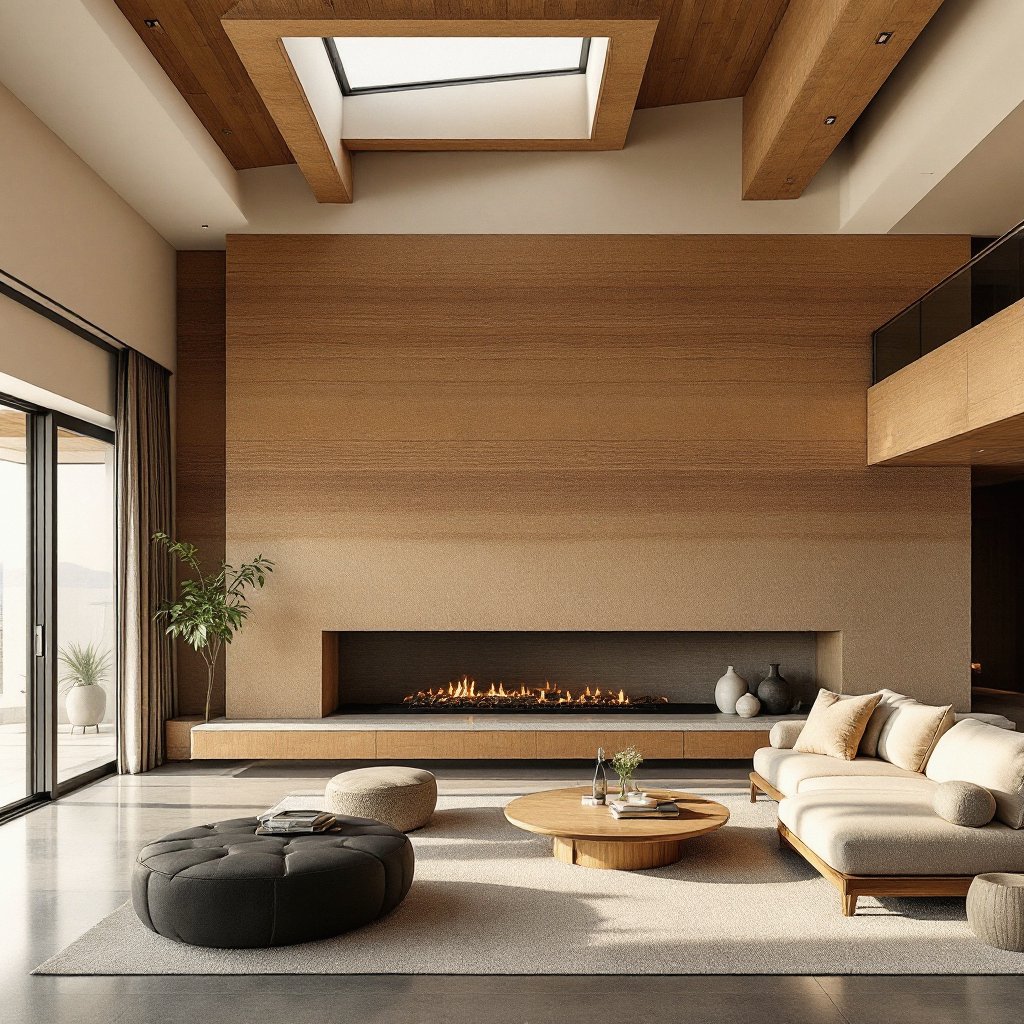
Williamson County, Leiper’s Fork, Belle Meade, one of the South’s great estate markets, and not one rammed earth landmark in it yet. The first-mover advantage is sitting on the table. From $1M.
Request a Consultation Call (307) 217-5491← Back to our Tennessee service area
Nashville has spent two decades becoming one of the strongest wealth-formation stories in the American South, music and entertainment money joined by healthcare fortunes, relocated finance and a steady migration of families trading coastal tax bills for Tennessee's lack of a state income tax. The estate belt that absorbed that wealth runs south of the city through Williamson County: Franklin, Leiper's Fork, Arrington, College Grove, and the old-money enclaves of Belle Meade closer in. What that belt is full of is very fine, very similar houses, brick and stone traditional, modern farmhouse by the acre. What it does not contain is a single significant rammed earth residence. In a market where distinction is the entire point of building custom, that absence is not a warning. It is an invitation.
First movers in a market like this get something money usually cannot buy afterward: primacy. The first serious earthen estate in Williamson County will be the one the architecture tours talk about, the one appraisers reference, the one every subsequent project is compared to. We think about that primacy the way our clients do (as an asset) and we build the precedent packet, the sample panels and the engineering documentation to make the county's first review of the material its easiest.
Music wealth builds differently. Performers and songwriters live by tour cycles and late hours; producers and engineers think in acoustics as a first language; all of them buy privacy the way other markets buy square footage. Rammed earth answers that brief with unusual precision. A two-foot monolithic earth wall is one of the quietest wall systems that can be built: mass is what stops sound, and these walls have more of it than anything short of a bank vault. Home studios, listening rooms and rehearsal wings gain isolation that framed construction chases with expensive assemblies and still misses. And the estate-belt instinct for gated privacy translates naturally into walled courtyard plans, where the wall is not a fence but a piece of stratified landscape. For a clientele that has seen every finish Belle Meade has to offer, a wall made of compacted Tennessee ground is a genuinely new sentence.
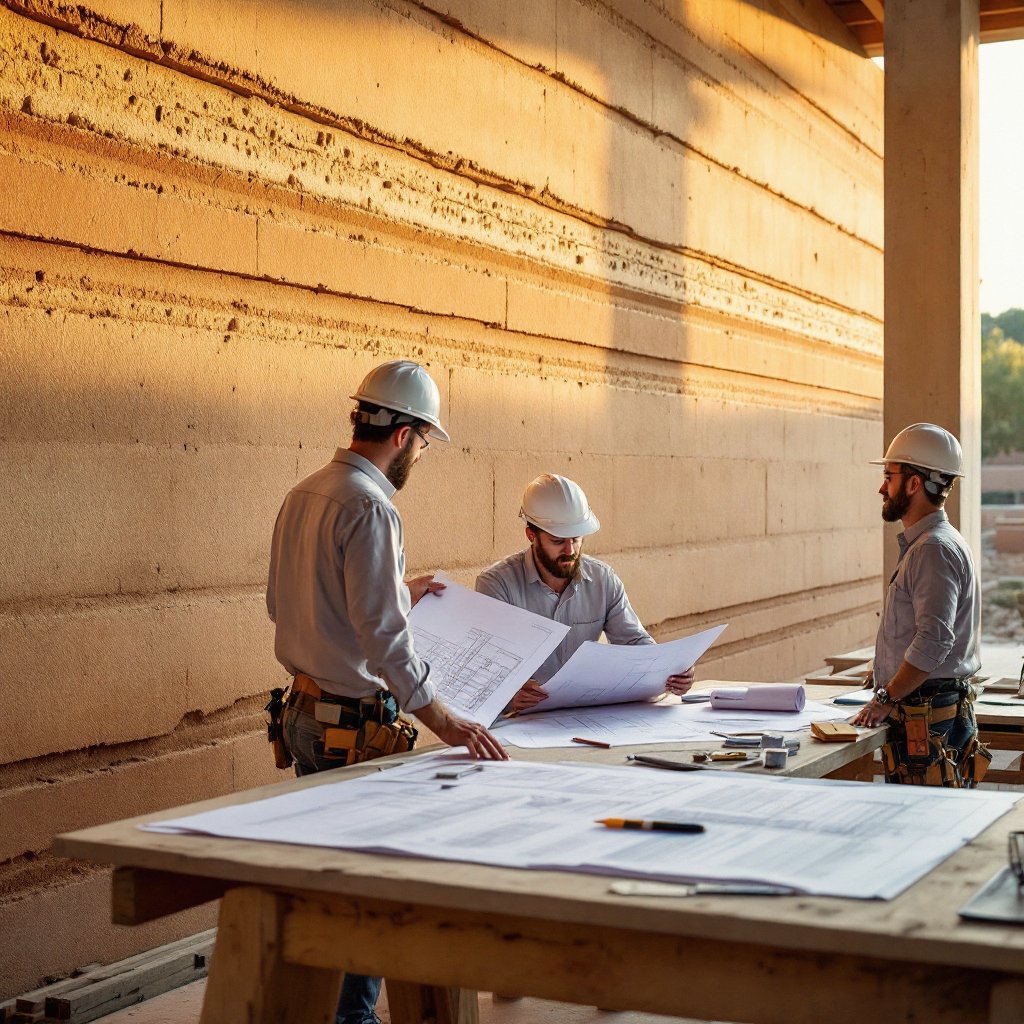
With the four-season assembly we build across our eastern markets: an insulated-core double-wythe wall (two wythes of stabilized rammed earth, 5–10% cement content, around a continuous insulation layer) so the visible material inside and out is pure strata while the section meets modern energy code for a climate that swings from July humidity to January ice storms. Humidity is the local question, and mass earth answers it better than most materials: the walls are vapor-open, buffering interior moisture swings rather than trapping them, which is why the pisé farmhouses of damp inland France have outlasted their builders by two centuries. Rain gets the good-boots-good-hat discipline, 24–36 inch overhangs, elevated concrete stem walls, breathable water repellents, grading that moves storm bursts away fast. Tornado-season wind loads meet a wall weighing several tons per running foot; the structural conversation is short.
Middle Tennessee sits on limestone, and limestone keeps opinions. Karst geology (sinkholes, springs, caves, disappearing streams) makes geotechnical review the honest first step of any Williamson County estate, and we treat it as design information rather than an obstacle: foundation systems are engineered to the parcel's actual subsurface, and spring lines and sink features become landscape assets kept at a respectful distance. The ridge-and-hollow topography south of town is a gift to this material. A rammed earth house stepping along a ridge shoulder, long axis east–west, reads like an outcrop of the hill itself, and the hollows' morning fog against a strata wall is the kind of scene that ends up justifying the whole budget. Test pits tell us early whether the parcel's own ground can join the wall blend; Tennessee's iron-tinged clays and silts often can, lending the strata a warm ochre signature that suits the landscape.
The four-season case is best made month by month. July and August: the mass shrugs off afternoon heat spikes while the vapor-open walls keep interior humidity civil: the house feels like a springhouse, not a sealed box. October: the walls bank warm afternoons and spend them on the first cold nights, stretching the no-mechanical shoulder season by weeks on either end. January: the insulated core does its quiet work, the mass smooths the furnace's cycling into something you stop noticing, and an ice storm that takes the power out meets a house that coasts on stored heat instead of plunging. April: storm season arrives and the loudest thunderstorm of the year is a rumor through a two-foot wall. None of this is exotic engineering: it is the same physics that kept French farmhouses comfortable for two centuries before the thermostat existed, applied to a climate that swings harder than France ever did. Owners in four-season markets consistently report the same discovery: the house is not just efficient, it is calm, and calm turns out to be what the budget was buying all along.
| Question | The Nashville answer |
|---|---|
| Wall assembly | Insulated-core double-wythe, 18–24" total, strata faces inside and out |
| Climate detailing | 24–36" overhangs, elevated stem walls, vapor-open finishes for Southern humidity |
| Ground truth | Karst geotechnical review first; foundations engineered to the parcel's subsurface |
| Timeline | 16–26 months soil test to keys |
| Budget | Turnkey $250–$450+ per square foot; $1M residential minimum |
Rammed earth is not foreign to the South: it is Southern history. The Church of the Holy Cross in Stateburg, South Carolina, has held services inside earthen walls since 1850, and the pisé tradition it grew from arrived on the Eastern Seaboard with the republic itself. We open every Middle Tennessee permitting conversation with that lineage and close it with modern engineering: stamped structural documentation, energy modeling for the insulated assembly, and physical sample panels that give review boards something to touch. Williamson County's building departments process high-end custom construction constantly; what they have not yet processed is this material, which is why we arrive with the full packet rather than a pitch. Financing follows the standard custom-estate draw schedule, and our precedent documentation carries the appraisal conversation the way it has in every market where we were the first.
Every market we serve had a first rammed earth estate, and that project always enjoys a status the tenth never gets. Nashville's first is still unbuilt. If you hold land in the estate belt (or you are choosing it now, in which case we will gladly walk parcels and read ridge, karst and soil before you close) the opportunity is specific: the region's inaugural piece of monumental earthen architecture, built from Tennessee ground, quiet as a vault and designed to outlast every trend on the street. Residential builds start at $1M and run 16–26 months from soil test to keys.
Request a Consultation Call (307) 217-5491
