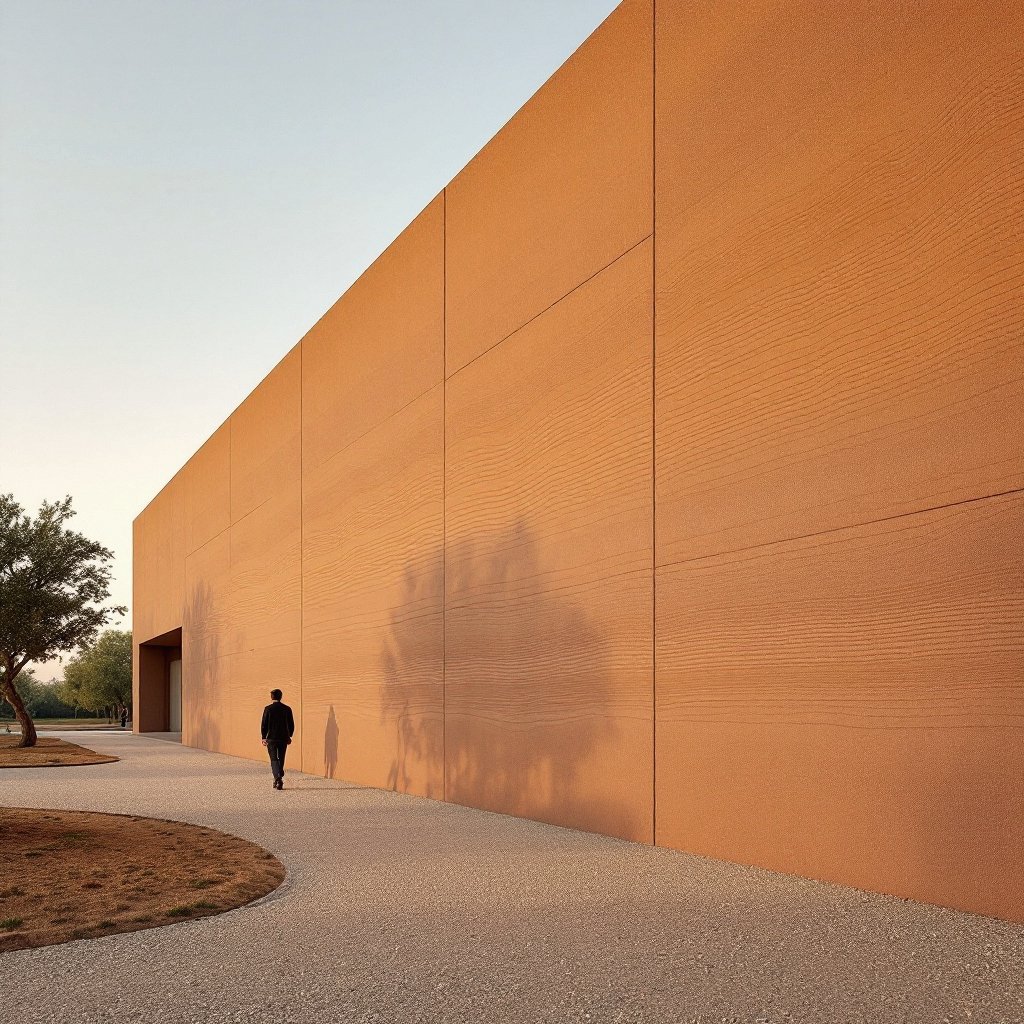
The United States has been building with compacted earth since the founding generation, then forgot, then remembered. The full American story, told properly, because a resource hub owes the record.
Request a Consultation Call (307) 217-5491Rammed earth arrived in America with European immigrants and Enlightenment pattern books. French pisé de terre technique circulated among the young republic's builders, South Carolina became an early center, and the 1850 Church of the Holy Cross at Stateburg, a National Historic Landmark, still holds services inside rammed earth walls built before the Civil War. German and French settlers carried the method inland; earthen farmhouses, churches and outbuildings rose from New York to the Carolinas through the nineteenth century.
The method's strangest American chapter: the federal government became its champion. In the 1930s–40s, the USDA and university programs studied earthen construction as affordable rural housing, publishing bulletins, building demonstration homes, and testing walls with engineering rigor decades ahead of its time. South Dakota State College ran multi-decade wall-weathering studies; the U.S. saw hundreds of documented rammed earth homes rise between the wars. Cheap postwar lumber and cement ended the program, economics, not performance, wrote that ending.

The 1970s energy crisis restarted the story where the climate argued loudest. Arizona, Tucson above all, became the proving ground of modern American rammed earth: pioneering contractors professionalized soil engineering and formwork, building hundreds of homes through the 1980s–2000s and training the generation that carries the craft today. New Mexico, California and Colorado grew parallel practices; codes, engineers and lenders learned the material; and the region's builders quietly created the template every American earthen specialist now works from.
The current chapter runs on three engines: carbon accounting that finally prices concrete honestly, wildfire seasons that made mineral walls an underwriting conversation, and an image economy that fell in love with strata. Napa wineries, museum walls and eight-figure desert estates headline the era, while east of the Mississippi, entire states remain effectively unbuilt. That's the frontier Bighorn was founded for: Tennessee, Kentucky and Indiana hold almost no earthen stock, four-season assemblies have solved the climate question, and the first estates in these markets will be the reference projects cited for decades. American rammed earth history is still being compacted, lift by lift.
The American paper trail has a definite beginning: S.W. Johnson's 1806 "Rural Economy," the first American book to explain pisé de terre for local builders. Johnson translated and adapted the French method (refined over generations around Lyon, where whole villages of rammed farmhouses still stand) into instructions a landowner could hand a foreman. It arrived at the perfect hour: a young republic rich in soil, short on sawmills, and enamored of Enlightenment improvement literature. Agricultural journals and pattern books then spread the technique the way the internet spreads it now, one persuasive account at a time, from gentleman farmers to their skeptical neighbors.
South Carolina's High Hills of Santee hold the densest surviving cluster. The Borough House Plantation at Stateburg preserves one of the country's most significant collections of pisé buildings, and the 1850 Church of the Holy Cross nearby (a National Historic Landmark) makes the argument no brochure can: earthen walls raised before the Civil War, still plumb, still in service through humid Carolina summers and the occasional hurricane. Visitors take home the lesson engineers already know. Kept dry at the top and the bottom, rammed earth simply declines to age on schedule.
More than most people believe. The USDA's Farmers' Bulletin series put rammed earth instructions directly into rural mailboxes, treating compacted soil as a practical answer to the farm housing problem, complete with wall sections, mix guidance and construction sequences a county agent could supervise. South Dakota State College went further: test walls built and then deliberately left to weather, inspected across decades, generating longevity data with an engineering patience the private market never funds. Hundreds of documented rammed earth homes rose between the wars on the strength of that public research. What ended the program wasn't failure, the walls passed. Cheap postwar lumber, cheap cement and a mortgage industry standardized around the framed house simply outcompeted the bulletin. The physics didn't expire; the subsidy structure did. Every revival since has begun by rediscovering what the federal researchers already wrote down.
In stages, and the stages matter. The 1970s energy crisis made thermal mass a headline instead of a footnote, and the era's owner-builder movement supplied the volunteers, idealists ramming walls by hand from mimeographed plans and rediscovered USDA bulletins. Through the 1980s the survivors of that apprenticeship became contractors: engineered formwork replaced scavenged plywood, pneumatic tampers replaced hand rammers, soil labs replaced folklore, and cement stabilization in the 5–10% range gave inspectors numbers they could approve. Tucson's builders worked out the commercial template (how to bid earthen walls, insure them, schedule them, and warranty them) and code officials, engineers and lenders across the region learned the material file by file. That professional inheritance, not any single famous house, is the revival's real monument. It's the reason a rammed earth contract in 2026 reads like a construction document instead of a manifesto.
The most instructive parallel in the story. Western Australia (the Margaret River region above all) built rammed earth into something America never quite achieved: a mainstream regional industry, with earthen wineries, homes and public buildings ordinary enough that lenders, insurers and inspectors stopped treating them as exotic. Australia's contribution to the craft was normalcy at scale, and its formwork practices and stabilization experience flowed back into the international literature every American builder now draws on. The lesson for our four states is direct: the ceiling on rammed earth isn't climate or code. It's how many professionals a region has trained, and that number can change fast once the first projects prove out.
Institutions arrived. The Nk'Mip Desert Cultural Centre in British Columbia, completed in 2006, put a monumental rammed earth wall on the continent's architectural front page, and the years since have added wine-country tasting rooms, museum walls and eight-figure desert estates to the portfolio. Behind the glamour, two quieter shifts did the structural work: insulated rammed earth assemblies solved the four-season problem the mid-century researchers never cracked, and carbon accounting (with cement responsible for roughly 8% of global CO2) recast earthen walls from nostalgic to strategic. For the first time in the American story, the material is simultaneously engineered, insurable, beautiful and climate-argued. No previous era could say all four.
Read the timeline honestly and one gap glares: two centuries of American rammed earth, and the four-season interior (Tennessee, Kentucky, Indiana) remains nearly blank. The founding era clustered on the Atlantic coast, the federal program scattered demonstrations and then dissolved, and the revival stayed loyal to the desert. Yet the insulated assemblies exist, the engineering is settled, and the soils of the Upland South and Midwest test as well as any. The next chapter of this history is the one where rammed earth finally becomes a four-season American material, and it will be written by the first estates built east of the hundredth meridian's comfort zone. Bighorn exists to be that author. The record above is our bibliography; the walls come next.

| Era | Marker | What it proved |
|---|---|---|
| 1806 | S.W. Johnson publishes "Rural Economy" | French pisé enters American print and practice |
| 1850 | Church of the Holy Cross, Stateburg SC | Antebellum earthen walls still in service, a National Historic Landmark |
| 1930s–40s | USDA bulletins; South Dakota State College weathering studies | Federal research validates durability; hundreds of homes built |
| 1970s–80s | The Tucson-centered Southwest revival | Owner-builders become professionals; the modern trade template forms |
| 2006 | Nk'Mip Desert Cultural Centre, British Columbia | Rammed earth goes institutional and monumental |
| 2020s | Insulated assemblies and carbon accounting mature | The four-season chapter opens, largely unwritten |
Request a Consultation Call (307) 217-5491
