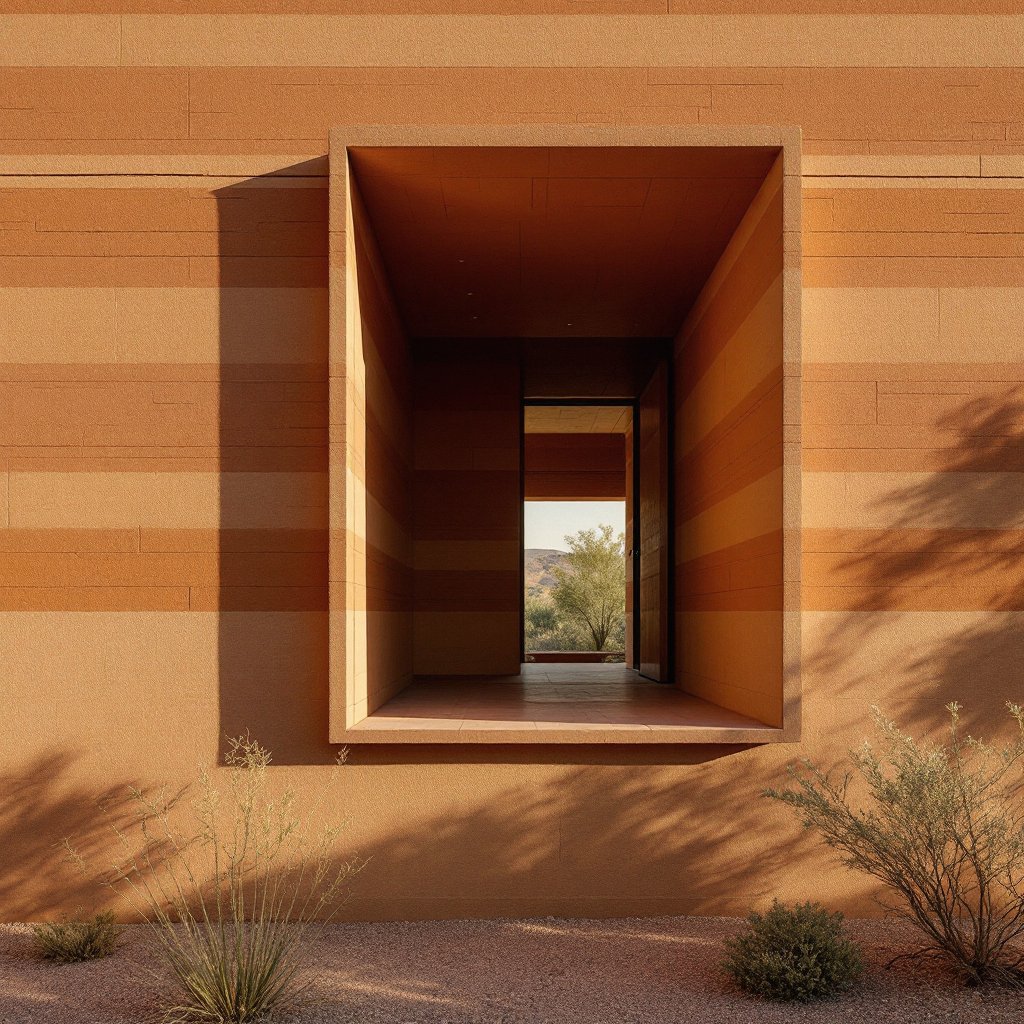
The desert didn't patent this material. Insulated-core assemblies, freeze-thaw stabilization and boots-and-hat detailing have taken rammed earth from British Columbia to the Alps, and now to Tennessee, Kentucky and Indiana.
Request a Consultation Call (307) 217-5491The most common objection we hear east of the Mississippi: "isn't that a desert thing?" It's a fair question with a settled answer, and since our practice deliberately spans Arizona and the four-season states, we're the right people to give it.
The modern proof stands in cold, wet places. British Columbia's Nk'Mip Desert Cultural Centre (a 260-foot insulated rammed earth wall in a climate with real winters) has performed flawlessly since 2006. Alpine Europe builds contemporary earthen structures through freeze-thaw cycles that make Kentucky look gentle. The engineering that made those walls work is exactly what we specify in Tennessee, Kentucky and Indiana.
The four-season wall is a sandwich: an exterior stratified wythe, a continuous rigid insulation core, and an interior stratified wythe, tied across with stainless connectors. The result meets modern energy codes while keeping true strata on both faces, and it puts the thermal mass inside the insulation, where it holds your conditioned temperature like a flywheel instead of fighting the weather. Desert walls don't need the core; northern walls are better with it than almost any conventional assembly.
Water expanding in freezing pores is the mechanism that eats unstabilized surfaces in cold climates. Stabilization percentages tuned for saturation resistance, sealers that shed liquid while breathing vapor, and detailing that sends walls into winter dry (the same trio that protects engineered concrete) retire the risk. This is recipe engineering, not hope.
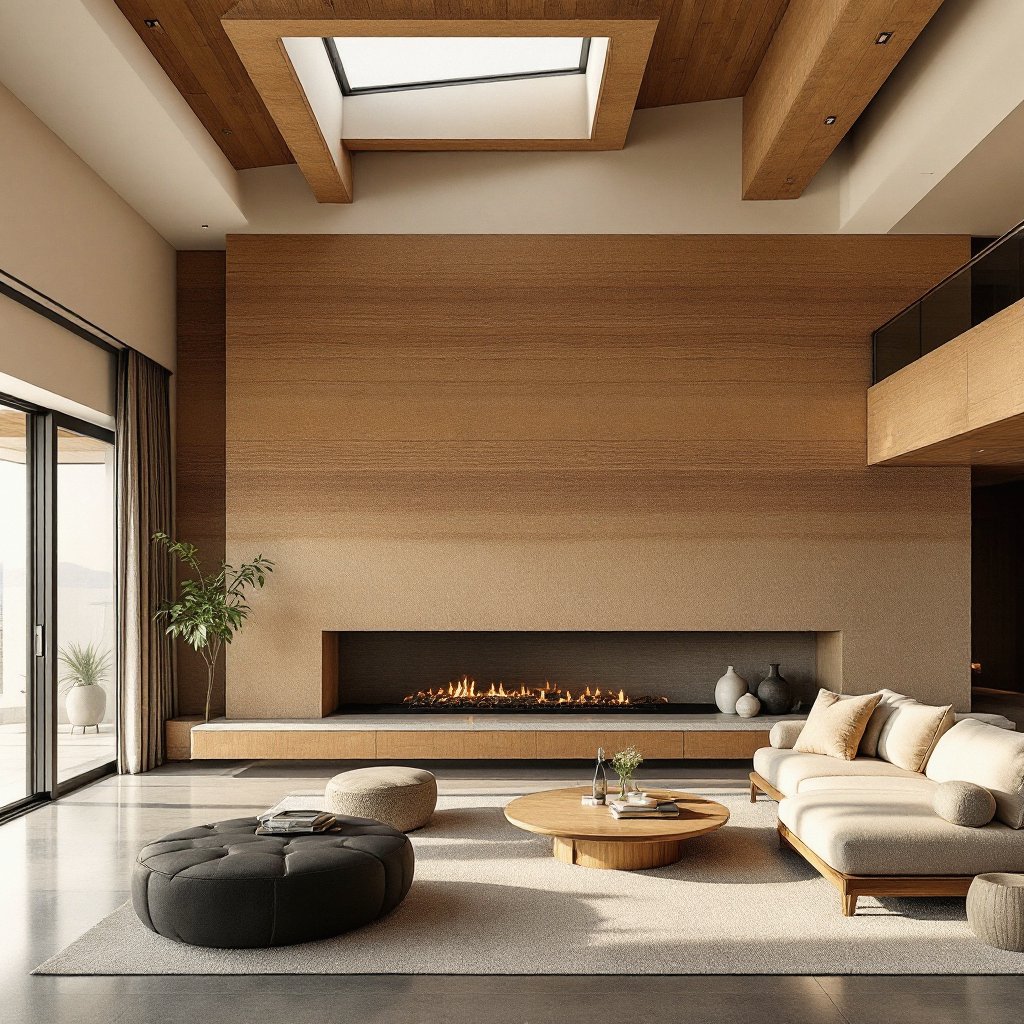
Interiors that barely move while outdoor temperatures swing forty degrees; humidity buffered through muggy Augusts; silence during storms that rattle framed houses; and walls that treat an ice event as weather rather than emergency. The desert made this material famous. The seasons are where it shows off. Tennessee, Kentucky, Indiana: the engineering is ready when you are.
Since the insulated-core assembly carries most of the four-season argument, it deserves a proper tour. Picture the finished wall in cross-section, outside to inside. First, an exterior wythe of stratified rammed earth (a genuine structural earth wall, not a veneer) taking the weather, the freeze-thaw cycles and the photographs. Behind it, a continuous layer of rigid insulation running unbroken from footing to top plate. Then an interior wythe, equally genuine, sitting entirely inside the thermal envelope where its hundreds of tons of mass hold your conditioned temperature. Both wythes rise off the same engineered footing, rammed in coordinated lifts with the insulation placed as the wall climbs, so the sandwich is built as one act rather than assembled afterward.
The connectors crossing the core are stainless steel, and both words are doing work. Steel, because the two wythes must act together structurally, sharing loads, resisting wind, behaving as one wall rather than two acquaintances. Stainless, for two reasons: the ties live in a zone where condensation is theoretically possible for a century or two, and ordinary steel's corrosion products expand and crack the surrounding material; and because metal conducts heat, the ties are the only thermal path through an otherwise continuous break, so they're specified and spaced to keep that leakage negligible. It is exactly the discipline cavity-wall masonry has used in cold climates for a hundred years, translated into earth.
Why the fuss over a continuous core? Because insulation only performs where it's unbroken. A conventional framed wall is interrupted every sixteen inches by a wood stud that conducts heat several times faster than the insulation beside it, thermal bridging that quietly drags a wall rated "R-20" down to a real-world number well below it. The double-wythe earth wall has no studs, no headers, no rim joists: one uninterrupted plane of insulation with only the engineered ties crossing it. The rated number and the real number are, for once, close relatives.
Then the mass adds what the rating system doesn't measure. R-value describes steady-state heat flow, but weather isn't steady: it swings, and swings are precisely what tons of interior mass absorb. An insulated-core earth wall therefore performs like its honest R-value on the coldest steady night and outperforms it across every oscillating day, which is most days. That's how the assembly meets modern energy codes on paper and then embarrasses the paper in person.
It's worth understanding the enemy properly, because the fix follows from the mechanism. Water expands roughly 9% when it freezes. If a wall's surface pores are saturated when a hard frost arrives, each freezing pore becomes a tiny hydraulic jack, and repeated cycles (Kentucky can deliver dozens in a winter) fatigue the surface until it powders and spalls. Note what the mechanism requires: saturation at the moment of freezing. Cold alone does nothing; dry earth freezes and thaws indefinitely without complaint.
So the defense has two layers. Keep the wall from getting saturated, stem walls out of the splash zone, deep overhangs, copings, breathable sealers, drainage that sends walls into winter dry. And make saturation survivable when weather wins a round anyway, stabilization percentages tuned for freeze-thaw durability, the same logic by which engineers air-entrain concrete for northern service. Belt, suspenders, centuries.
Winter gets the headlines, but a Tennessee August interrogates a wall differently: weeks of 90-degree heat with dew points to match, air conditioning fighting latent load as much as temperature. Here the assembly plays offense. The interior mass flattens the afternoon spike, letting smaller equipment run long, gentle cycles, and long cycles are exactly what dehumidifies best. The vapor-open walls buffer indoor humidity swings besides, absorbing moisture when the house fills with steam and weather, releasing it when the air dries. Owners describe August indoors as the same word they use for January: steady.
Put numbers on the exam our three eastern states set. Climate zones 4A and 5A mean humid summers, real winters with design temperatures near or below zero in a hard Indiana cold snap, on the order of sixty inches of annual rain in the wetter Tennessee country, and Kentucky's specialty, the ice storm, which coats everything and knocks the power out for days. Each line item meets a specific answer: the humid summers, mass plus long-cycle dehumidification; the design temperatures, the continuous insulated core; the sixty inches, boots-and-hat water detailing executed without exception; the ice storm, a house whose envelope holds temperature for many hours without electricity and whose walls treat the event as weather rather than emergency. We didn't bend the material to this climate; we specified the version of it that northern builders proved decades ago.
"Rain will melt it." Unstabilized, undetailed earth erodes, yes, and stabilized, detailed earth demonstrably doesn't, which is why the reference projects stand in wet climates. Water is a detailing problem with a centuries-old solution, not a material veto. The skeptic's instinct is right about bad walls and wrong about ours.
"Frost will crumble it." Only saturated walls suffer freeze-thaw damage, and the entire assembly exists to keep saturation from coinciding with frost, plus stabilization tuned so occasional coincidence is survivable. Alpine Europe freezes harder than Indiana and builds earth anyway.
"It can't meet energy code." The single-mass desert wall genuinely struggles with northern code arithmetic; the insulated-core wall meets it outright, with continuous insulation most framed assemblies can't match and mass performance the code doesn't even count in its favor.
"No bank will touch it." Lenders fund documentation, not familiarity. Engineered plans, test records and detailed budgets (which this material generates in abundance when built properly) move these projects through construction lending on the normal path. Our Learn hub covers financing specifically.
"Nobody local can repair it." Fair concern, honestly answered: the trade is specialized, which is why we archive every project's soil recipe and detailing so future work is a matched patch rather than a mystery, and why the maintenance list is deliberately short. Drainage kept working and a sealer refreshed every few years is a smaller ask than most luxury facades make of their owners.
